
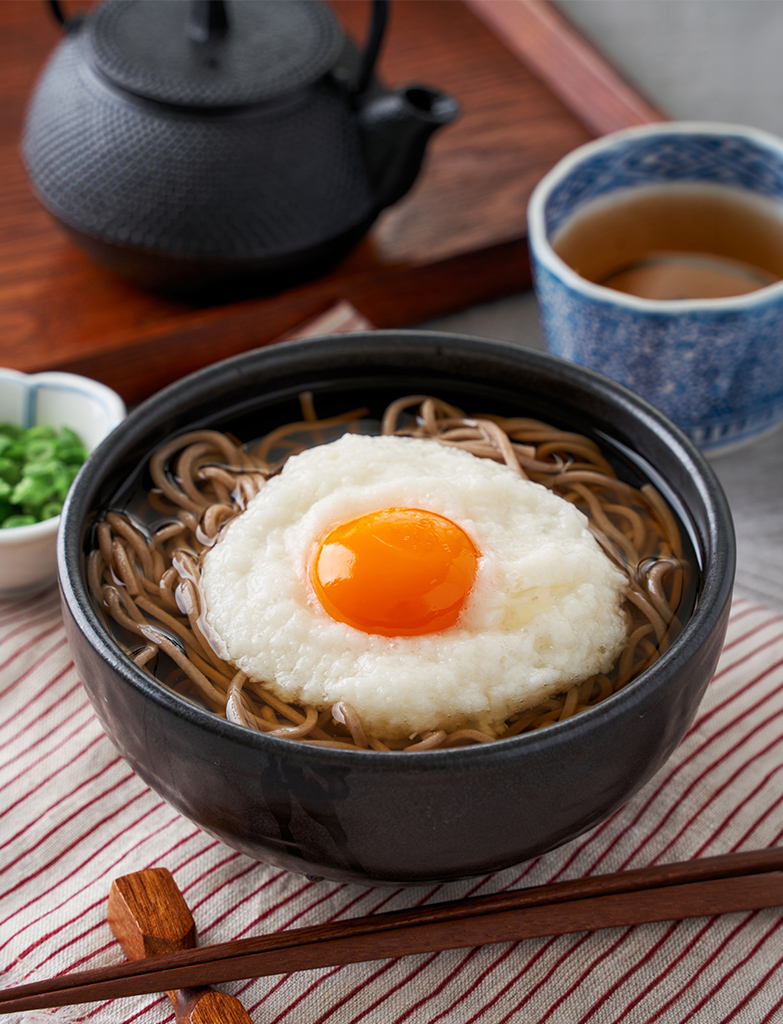
Kanda Matsuya has been quite the soba stalwart—a prominent slurp hub for noodle lovers all across Tokyo. If you are a noodle lover too, make sure to visit the Kanda Matsuya House for a delicious joyride. The Soba here are served with options—either hot or cold, in soup or dry. Chewy, delicious and flavour-packed, these noodles are still handmade, carrying forward their age-old legacy.
Kanda Matsuya’s legacy
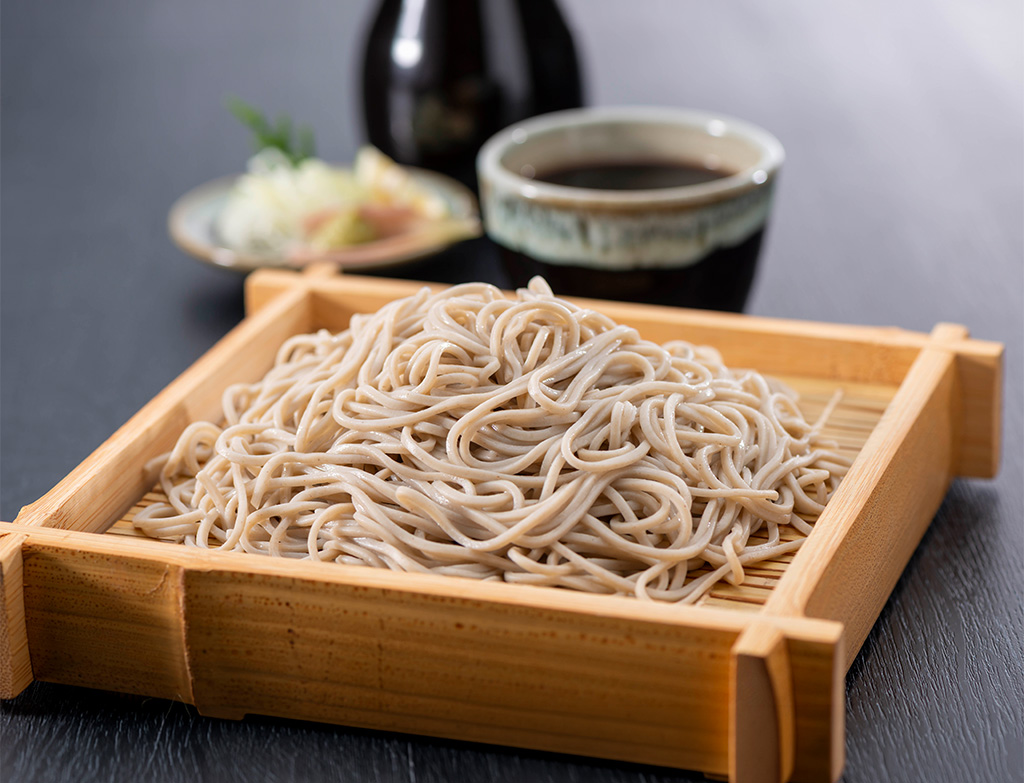
The noodle house is almost a century old—since 1884, this two-storey historic building boasts cold-served Soba noodles that offer a taste of traditions. Among its many treasures is an antique clock that has served as a silent guardian of memories. Kanda Matsuya is an Edo-style buckwheat noodle house that was once taken down by fire during the Great Kanto Earthquake of 1923, and later on the building was rebuilt with black roof tiles. Presently, it is listed as a historical landmark by the Tokyo Government.
The art of noodle making
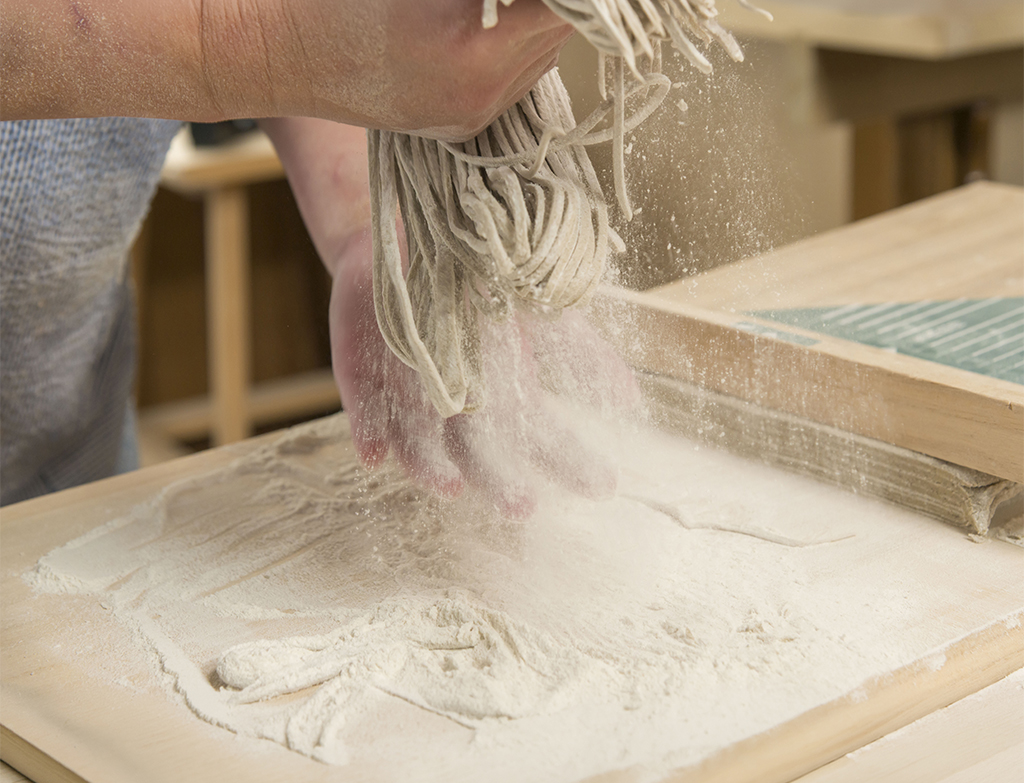
Soba served here is called the “Soto Niwari Soba,” created by adding 10 per cent buckwheat flour to 20 per cent glue. You can well hear the sound of knives diving through buckwheat noodles as the chef chops them. It takes two years for a chef to make them. The noodles here arrive on a century-old tradition—a bamboo mat, tsuyu dipping sauce, and prawn tempura.
Noodle lover’s paradise
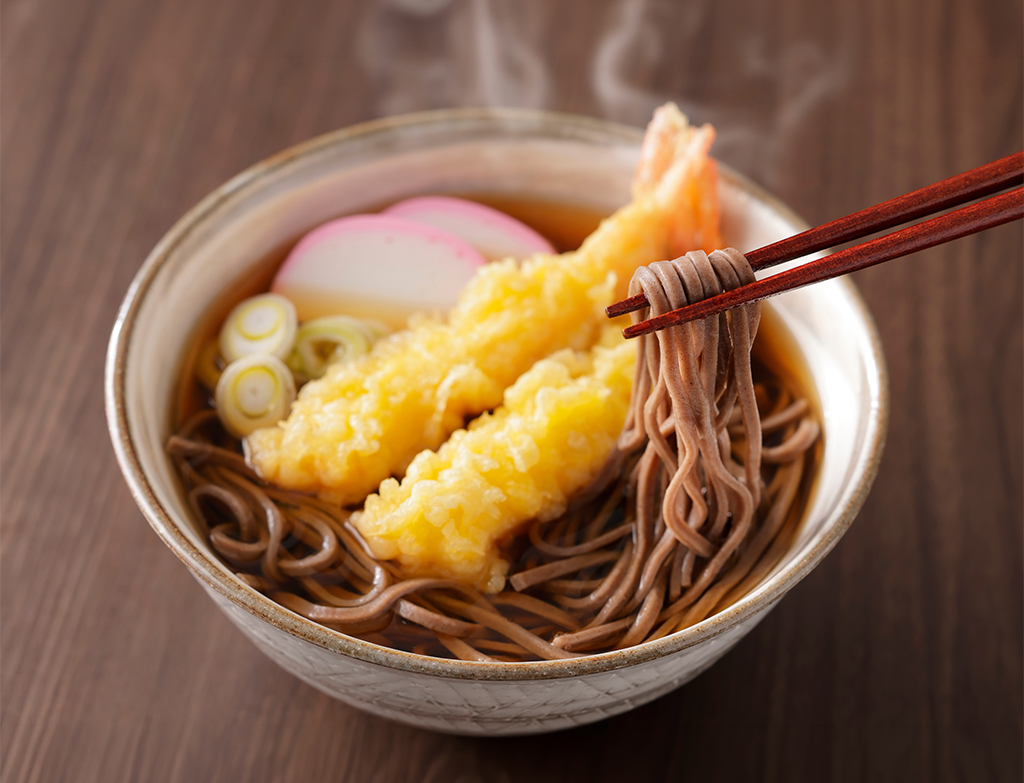
Among all other dishes that get served here, you must try the “Goma-Soba,” which is prepared from the finest bonito flakes and the umami-rich “Soda-bushi” and filled with sesame paste. The “Mori-Soba” is also one of the most popular dishes here and is served with a special dipping sauce. Apart from the star dish—buckwheat Soba noodles- the seasoned Chicken Yakitori is made from a sweetened sauce from buckwheat noodles; then there is Tsukuba jidori chicken, a game-changing dish. A great time to visit this noodle bar would be during the New Year. Traditionally, Japanese people consume toshi-soba noodles during the New Year.
The Atmosphere
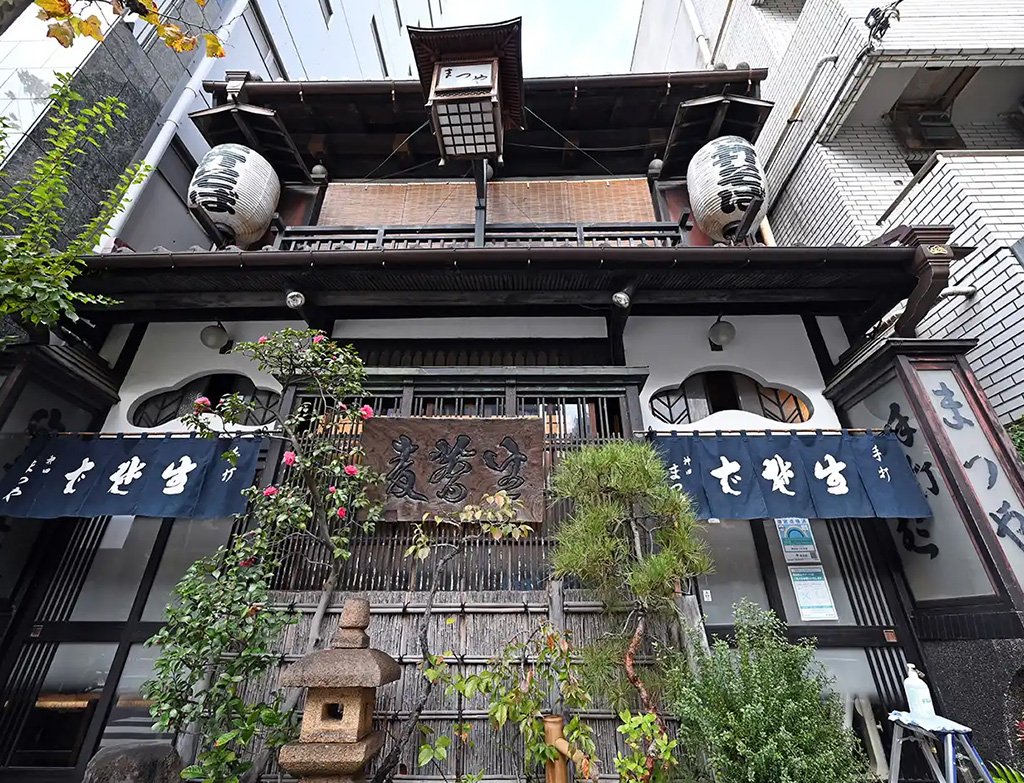
As soon as you step inside the celebrated soba shop, you will be welcomed by a charming, nostalgic setting. The noodles are unequivocally the main character here, and it’s less about anything else. The seating arrangements do not seem very overwhelming; the interior is an old-fashioned atmosphere with subtle lighting, black ceilings, and calligraphy etched across picture frames. Slurpers can enjoy simple side dishes—tempura prawns, braised chicken, and laver—to make it more flavourful.
How to reach Kanda Matsuya
To reach Kanda Matsuya, you have to take a short walk from Awajicho Station in Kanda.

 Add to favorites